Semiconductor stocks have been the biggest beneficiaries of the Artificial Intelligence (AI) boom, as these companies provide the “picks and shovels” for the AI gold rush. But that raises the question of whether this is a boom or a bubble, says Neena Mishra, director of ETF research at Zacks Investment Research.
Nvidia Corp. (NVDA) and OpenAI announced a strategic partnership under which Nvidia will invest up to $100 billion in OpenAI. The investment will support new data centers with a capacity of at least 10 gigawatts of power. The Trump Administration has also approved some Nvidia chip exports to the UAE.
Nvidia Corp. (NVDA)
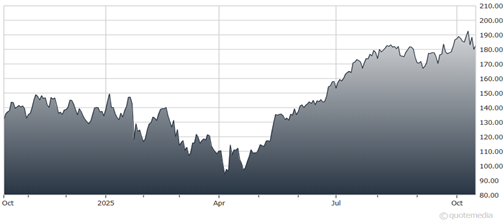
Advanced Micro Devices Inc. (AMD) shares have also surged recently after the chip designer announced a multibillion-dollar agreement with OpenAI on data centers that will use AMD chips. Under the deal, OpenAI will purchase six gigawatts’ worth of AMD chips and receive about a 10% equity stake in AMD, granted in phases upon reaching certain milestones.
AMD has long been viewed as a distant second in the AI chip market, which is dominated by Nvidia with more than a 75% market share.
Meanwhile, OpenAI and Broadcom Inc. (AVGO) announced a partnership to develop and deploy 10 gigawatts of custom AI chips and computing systems over four years. Financial terms were not disclosed. And Intel Corp. (INTC), which lost its edge years ago to Taiwan Semiconductor Manufacturing Co. (TSM), received a boost after Nvidia invested $5 billion in the firm.
The investment follows the US government’s move to take a 10% stake in Intel, now worth about 50% more due to the company’s stock rally. Both the Biden and Trump Administrations have supported Intel to strengthen domestic chip manufacturing.
OpenAI estimates that one gigawatt of capacity costs about $50 billion to bring online, with roughly two-thirds of that spent on chips, hardware, and infrastructure, according to the Financial Times.