
Some women complain that men think about the Roman Empire too much. But I think about Rome — a LOT! Often, I’m wondering if America is on the same road to ruin as Rome ended up on. That’s why I'm buying gold, says Sean Brodrick, editor at Weiss Ratings Daily.
The traditional date for the fall of the Western Roman Empire is 476 AD. But Rome's decline was a process that unfolded over centuries.
Wealth became increasingly concentrated. The middle class weakened. The currency was debased. Political instability grew. And confidence in the institutions holding everything together slowly eroded. Sound familiar?
(Editor’s Note: Sean is speaking at the 2026 MoneyShow/TradersEXPO Orlando, scheduled for Oct. 5-7. Click HERE to register.)
Countries CAN recognize their problems and fix them. And America remains enormously powerful. The economy is still growing. The dollar accounts for roughly 57% of disclosed global foreign-exchange reserves. US capital markets dominate global finance. And America remains a technological powerhouse.
So, I’m not predicting the United States will collapse anytime soon. But any student of history would worry about the path we’re on. Rome itself went through repeated crises and recoveries. Its decline wasn't a straight line. That's precisely why I find the comparison useful.
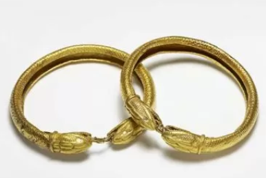
What do you buy when you’re worried about your empire? Here’s some gold jewelry I saw in the Roman city of Herculaneum when I visited it (and neighboring Pompeii) a couple of years ago. Rome turned to dust...but gold survived.
Gold’s rise doesn't require the United States to fall, either. It benefits from many of the trends I've discussed before — enormous government debt, persistent deficits, declining confidence in institutions, and the long-term erosion of purchasing power.
Bottom line? Governments come and go. Political systems change. Currencies are created, debased, and eventually replaced. Gold keeps going. That's the lesson I take from Rome.