It seemed like gold just could not lose in 2025. The SPDR Gold Shares ETF (GLD) surged over 30% in two months as traders flocked in, driven by inflation concerns and tariff headlines. But beneath the shiny surface, the options market sounded a more ominous note: Volatility was exploding, writes Brent Kochuba, founder of SpotGamma.
Spot gold found itself well beyond the $4,000/ounce milestone for the first time ever during this rally, fueled by both institutional and retail interest. Traders bid up calls to capitalize on the momentum, while they also bought up puts to hedge against downside. This psychology is as old as markets: Fear of missing out collides with fear of loss.
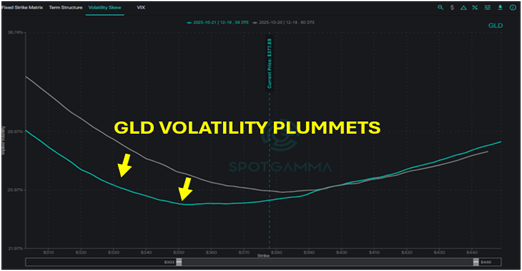
For GLD, these dynamics created a volatility trap where both call and put options had become absurdly expensive. When the correction finally arrived, it came fast: GLD crashed 6.4% in a single session on Oct. 21. This marked the largest single-day price decline since April 2013.
Normally, significant drops cause volatility to spike. Yet as GLD sold off, volatility dropped hard — especially for downside puts. The morning of Oct 21, I laid out this exact scenario ahead of the drop: “This is clearly a ‘stock up, vol up’ paradigm…vol is likely to contract if/when gold prices contract.”
What makes this a volatility trap? Extremely expensive option prices force traders to make a difficult choice, should they choose to play the game: Either pay heavily for premium, or risk being short options by betting against volatility.
As Monday’s market action revealed, even gold can lose its shine when facing a volatility trap. And as a trader, you need to stay aware of how vol shifts can take a bite out of your position. Because if you trade options, you are trading volatility.