

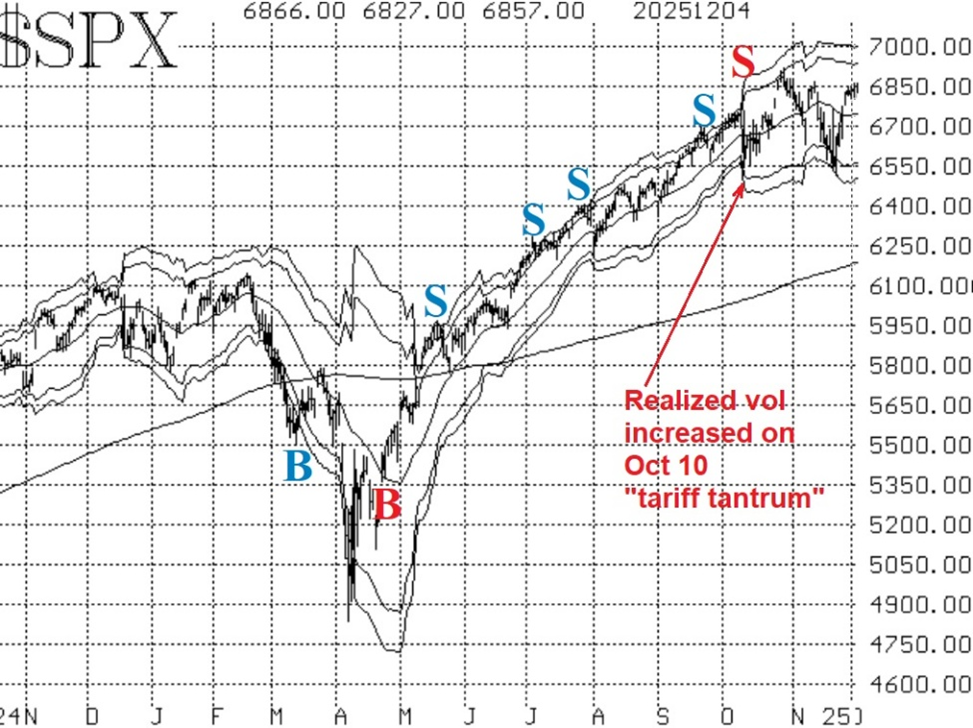
The S&P 500 Index (^SPX) has stalled near the top of the 6,500-6,900 trading range. This comes after a strong rally the week of Thanksgiving. But unless there is a clear breakout to new all-time highs, the trading range scenario is still dominant, advises Lawrence McMillan, editor of Option Strategist.
Part of the problem may be the upcoming FOMC meeting, where we will learn on Dec. 10 whether or not the Federal Reserve is going to lower rates again. It seems that the market is expecting that the rate cut will occur. If it doesn't, that could be problematic.
Equity-only put-call ratios are still rising, which means that they are still on “sell” signals for the stock market. Traders have been buying puts in relatively large quantities since that mid-October scare – even during the stock market rally since then.
Breadth continues to be a volatile technical indicator. Breadth has improved sharply since that Nov. 20 market low, and the “stocks only” breadth oscillator remains on a “buy” signal. However, the NYSE-based breadth oscillator is weaker and has been flirting with a “sell” signal.
Implied volatility has fallen. The CBOE Volatility Index (^VIX) “spike peak” buy signal of Nov. 21 remains in place, and it will continue to do so for 22 trading days – unless VIX rises back above its most recent peak at 28.27.
Another thing that the bulls have working for them right now is seasonality. There are a number of bullish seasonal factors that occur between Thanksgiving and the end of the following January.
In summary, there aren't many sell signals or negative indicators, while buy signals abound. The two main impediments currently seem to be the resistance on the SPX chart at 6,850-6,900 and the worries about the upcoming FOMC meeting. Regardless, we will continue to take positions in line with the confirmed signals and will continue to roll deeply in-the-money options.