

Reverting back to potential tit-for-tat strikes in the Middle East makes a ceasefire more remote. That means the global economy may have to endure an extended period of elevated oil, natural gas, and fertilizer prices that, over time, boost inflation, global bond yields, and potentially weigh on global growth, observes Tom Essaye, president of the Sevens Report.
This matters to you for two specific reasons. First, higher yields are one of the biggest headwinds for stocks right now. Fears of a quagmire will boost commodity prices. That, in turn, will keep yields elevated, keep inflation elevated, and potentially pressure consumer spending and global growth.
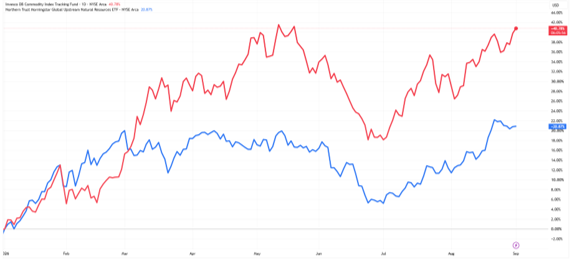
DBC (Red), GUNR (Blue) - YTD % Change
Source: TradingView
Second, it can impact what outperforms in the markets. As we saw Friday, growth factors in the market face stiffer headwinds when yields rise sharply. Since most growth ETFs are tech-heavy, that means the S&P 500 Index (^SPX) could feel pressure. Advisors will again want to make sure they have balance across portfolios and not be too growth/tech/AI heavy.
Bottom line: The conflicts are again in the headlines and impacting markets. It’s critical we understand how and why, so we can look past scary/sensational headlines and focus on the legitimate risks to markets.
From a positioning standpoint, the beneficiaries of a quagmire scenario remain commodity sectors – and investments such as the Invesco DB Commodity Index Tracking Fund (DBC) or Northern Trust Morningstar Global Upstream Natural Resources ETF (GUNR). So, it is worthwhile to make sure you do have at least some meaningful commodity/natural resource equity exposure (and in the appropriate weightings).