

The war in the Middle East is upending all kinds of markets – and changing long-held investor assumptions. The latest “casualty”: Expectations of more Federal Reserve interest rate cuts.
Take a look at the MoneyShow Chart of the Day, courtesy of Bloomberg. It shows that rate futures markets have now de-priced more Fed rate cuts in 2026. Specifically, they went from pricing in at least 50 basis points of cuts by December to indicating even ONE 25-point cut is a tossup.
The Latest War Casualty: Fed Rate Cuts
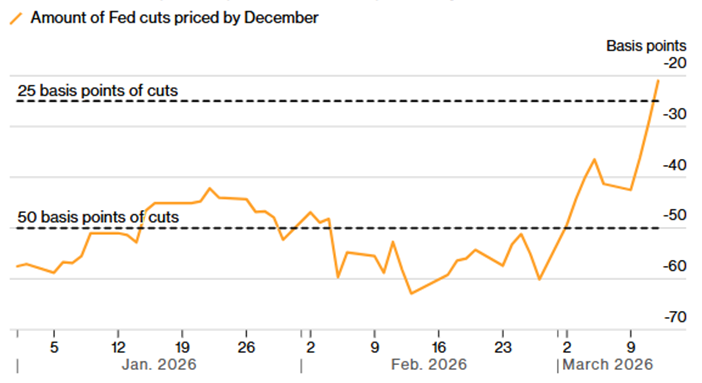
Source: Bloomberg
Why? Because of the potential inflationary fallout of a longer-lasting conflict. While consumer prices rose by a modest, expected amount in February, crude oil and gasoline prices have surged since the data was collected. Prices for everything from fertilizer to aluminum to coal to Liquefied Natural Gas are rising, too.
The longer shipping lanes in the Persian Gulf remain effectively shut down, the greater the ripple effects will be in the global economy. That means the Fed will likely have to sit on its hands for longer versus cut rates further.
Treasuries are slipping in response, with longer-term bonds getting hit the hardest. The iShares 7-10 Year Treasury Bond ETF (IEF) is down 0.4% in the last month, for instance, while the Vanguard Extended Duration Treasury Index Fund ETF (EDV) is off 2.3%. That’s taking steam out of trades that had been working – such as being long rate-sensitive housing stocks.
Bottom line? With Fed cuts becoming another casualty of the latest conflict, you can expect volatility and rocky market conditions to persist. Trade accordingly.