

Quality investing works in the long term. But what about the psychological aspect of trading and investing? How do you keep your head cool and make sound decisions? Let’s dive in right away, writes Pieter Slegers, editor of Compounding Quality.
We as humans are way less rational than we would dare to admit to ourselves. That’s exactly where the term herd behavior comes from. It’s very hard to go against the crowd.
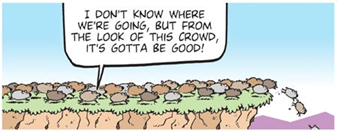
As a trader or investor, you should be aware of the many biases you suffer from:
- Recency bias: Assuming recent trends will continue in the future
- Loss aversion: A loss of $100 feels twice as painful as the satisfaction of a $100 gain
- Confirmation bias: Only looking at information that supports your current opinion
- Overconfidence bias: Believing you are better at picking stocks or timing the market than you really are
- Sunk cost fallacy: Continuing to hold or invest in a losing position because of prior time or money spent
- Mental accounting: Treating money differently based on where it came from or how it’s labeled, rather than overall value.
The list goes on and on. But the worst investment decisions are made on emotions. Whether you are feeling euphoric because a stock is going up…or panicking because a stock is going down…you need to stop doing that right away.
Let’s talk about three ways to avoid emotional decisions:
- Write down your investment thesis
- Decide in advance when you want to sell
- Ask if it’s a price drop or a fundamental problem
At the end of the day, investing isn’t about being the smartest person in the room. It’s about being the most rational and disciplined.