
One big surprise coming out of last week’s unusual press conference by Fed Chairman Jay Powell was his decision to remain on the Federal Open Market Committee (FOMC) as a Governor after Kevin Warsh takes over this month. That sets up an interesting dynamic for the Fed going forward, writes Louis Navellier, founder and chairman of Navellier & Associates.
The latest FOMC vote was split 8-to-4, with three hawks and one dove dissenting. That division underscores the challenge Warsh will face in building consensus. Minneapolis Fed President Neel Kashkari signaled that future policy could go either direction depending on economic data, while Cleveland Fed President Beth Hammack warned that rising oil prices are adding to inflationary pressures.
(Editor’s Note: Louis will be speaking at the 2026 MoneyShow Masters Symposium Dallas, scheduled for May 14-16. Click HERE to register.)
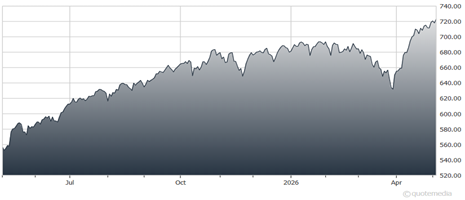
SPDR S&P 500 ETF Trust (SPY)
That leaves both Warsh and Treasury Secretary Scott Bessent with a delicate balancing act. With US debt now exceeding 100% of GDP, the so-called “bond vigilantes” remain a risk. There has been speculation about coordinated efforts to push Treasury yields lower, but any meaningful shift will require broader agreement within the Fed.
Energy markets are the wild card. Geopolitical tensions remain a critical factor. The naval blockade involving Iran is reaching a turning point, with limited storage capacity forcing potential production cuts. If Iranian oil wells are capped, restarting them could take months — further tightening global supply.
Even if the Strait of Hormuz reopens, energy markets have already been significantly disrupted. Crude oil prices are likely to remain elevated, with little relief expected until seasonal demand softens later in the year. Ironically, higher prices could help many stock markets around the world, since commodity-related stocks can act as an inflation hedge.