Air Canada Inc. (ACDVF) is a contrarian pick — and deliberately so. An airline in the middle of an oil price crisis. Alex Letko, portfolio manager at LetkoBrosseau, likes it because the current volatility completely masks the underlying transformation the company is executing, writes Amber Kanwar, host of the In the Money with Amber Kanwar podcast.
Air Canada is in the middle of a significant fleet renewal, bringing on new Airbus A321 XLR narrow-body jets that burn approximately 30% less jet fuel per mile than the aircraft they replace. The first one flies this month.
These planes will connect Air Canada hubs to secondary European cities, unlocking premium cabin revenue on routes that weren't previously viable — meaning revenue per seat goes up while fuel costs per mile go down. Margins improve structurally, not cyclically.
(Editor’s Note: Amber will be speaking at the 2026 MoneyShow Masters Symposium Toronto, scheduled for Sept. 24-25. Click HERE to register.)
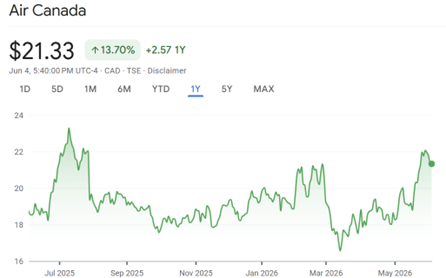
The earnings per share math is compelling: Air Canada earned approximately $1.50 in EPS last year. Management guidance points toward margins in the high double digits as the new fleet ramps up and capacity grows 5% annually. Letko's estimate: $6 in EPS by end of the decade. At eight times earnings — a deliberately conservative multiple — that’s a $50 stock. More than a double from here.
The free cash flow inflection is expected closer to 2028, as the capex cycle peaks and the new aircraft start generating returns. This is not a trade — it's a three-five year thesis for a patient investor. Letko's framing: The balance sheet is strong enough to weather the oil price volatility, and they'd rather own it now than miss the move once the story becomes obvious.