
Strife is picking up again in the Strait of Hormuz. That is the primary reason for the more risk-off mode in global stocks this week. Now, there are several potential levels oil traders will be monitoring, writes Eoin Treacy, editor of Fuller Treacy Money.
Brent crude spent most of February ranging just below $70 a barrel. It broke higher as an immediate response to the beginning of hostilities with Iran. In very simple terms, if a sub-$70 price level reflected the global reality of supply and demand before the attacks, it is reasonable to expect it will be an area of support since now there is an additional risk premium.
Brent Crude Oil
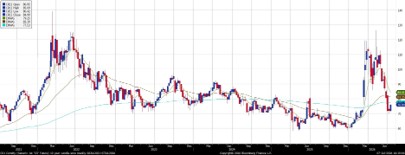
A higher floor for trading does not tell us where the ceiling is likely to be encountered. The extent to which the “ceasefire” holds will have a significant influence on opinions of how far a rally can go.
The first area of potential resistance is the $80 level. That represented a reassessment level for most of 2025 and now coincides with the area of the 200-day moving average. If this level holds, it will suggest this uptick in tension is part of negotiating tactics to squeeze concessions from the US.
If the price sustains a move above $80, the next level of resistance is $87. That is the lower side of the overhead top formation. That would still suggest the “ceasefire” is reasonably intact, but would imply toll fees on shipping traffic are more likely.
A sustained move above $90 would imply the semblance of a ceasefire is no longer credible and a hot war is again more likely.