
Warren Buffett famously remarked that, “A truly great business must have an enduring moat that protects excellent returns on invested capital.” In ETF form, perhaps the best-known example to invest in those businesses is the VanEck Morningstar Wide Moat ETF (MOAT), observes Tony Dong, lead ETF analyst at ETF Central.
Many value investors spend their careers searching for companies trading below their intrinsic value. The logic is straightforward. Estimate the future cash flows a business can generate, discount them back to the present, and compare that figure against the current market price.
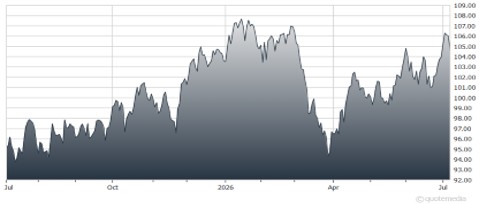
VanEck Morningstar Wide Moat ETF (MOAT)
The challenge is that even the most elegant valuation model is only as good as its assumptions. A stock may appear attractively priced today, but that does little good if the underlying business cannot maintain its relevance over the next decade.
If the competitive position erodes, margins compress, or customers migrate elsewhere, those projected cash flows can quickly prove optimistic. In that sense, forecasting future earnings is often less important than understanding whether a company can defend them.
That is where the concept of the economic moat comes in. Some companies possess competitive advantages that make it difficult for rivals to take market share, pressure pricing, or replicate their business model. These advantages can allow firms to earn excess returns for years, if not decades.
One organization that has attempted to formalize this concept is Morningstar. Its equity research framework identifies five primary sources of economic moats: Intangible assets, switching costs, network effects, cost advantages, and efficient scale.
The framework has proven popular with investors seeking quality businesses. MOAT has grown into an industry heavyweight, with approximately $11.4 billion in assets under management (AUM).