
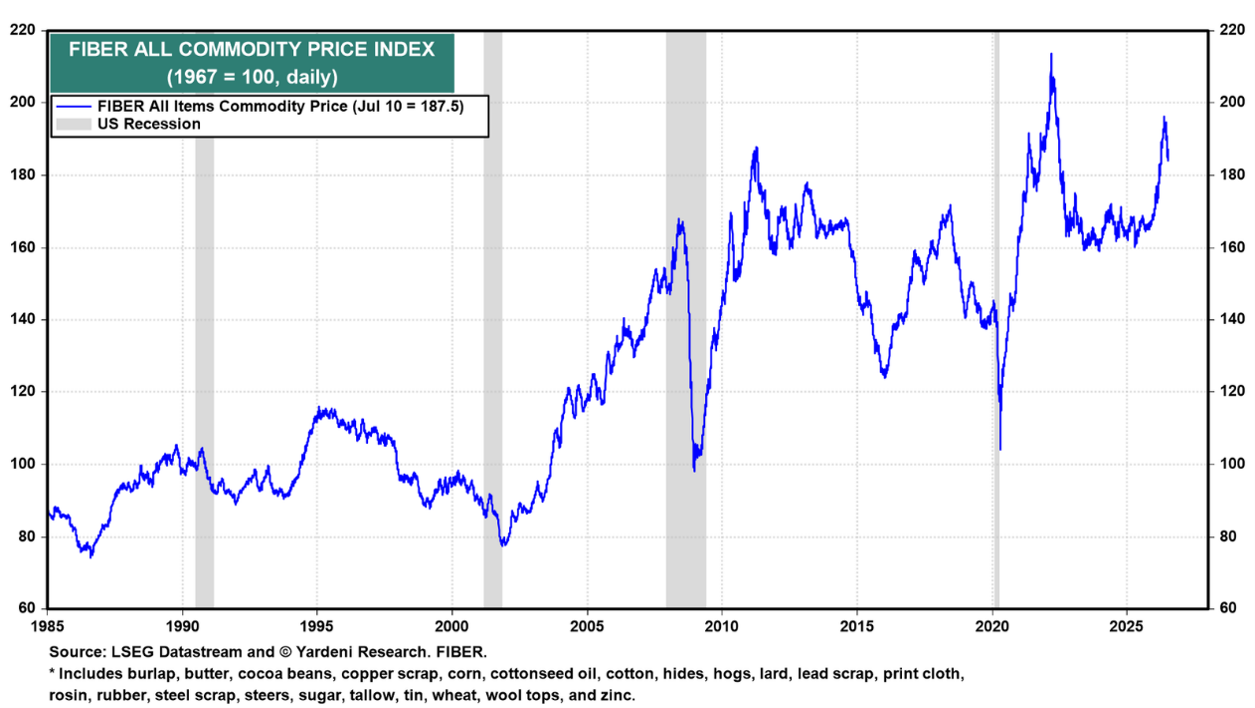
Back in early March, we wrote that the war between the US and Iran might last longer than widely expected. While the FIBER industrial materials price index, which includes West Texas Intermediate crude oil, remains elevated, the global economy is handling the latest oil crisis remarkably well, suggests Ed Yardeni, editor of Yardeni QuickTakes.
We suggested that any peace deal with Iran's government would effectively be vetoed by the Islamic Revolutionary Guard Corps simply by their threatening to attack ships sailing through the Strait of Hormuz. “These terrorists are likely to be hard to eradicate with just air power,” we wrote.
(Editor’s Note: Ed Yardeni is speaking at the 2026 MoneyShow Masters Symposium Las Vegas, scheduled for July 19-22. Click HERE to register.)
The IRGC still remains in control of the war. They fired at ships in the Strait in recent days, violating the interim US-Iran agreement signed last month that aimed to reopen the Strait and end the war after a further 60 days of negotiations. So, the war has re-escalated.
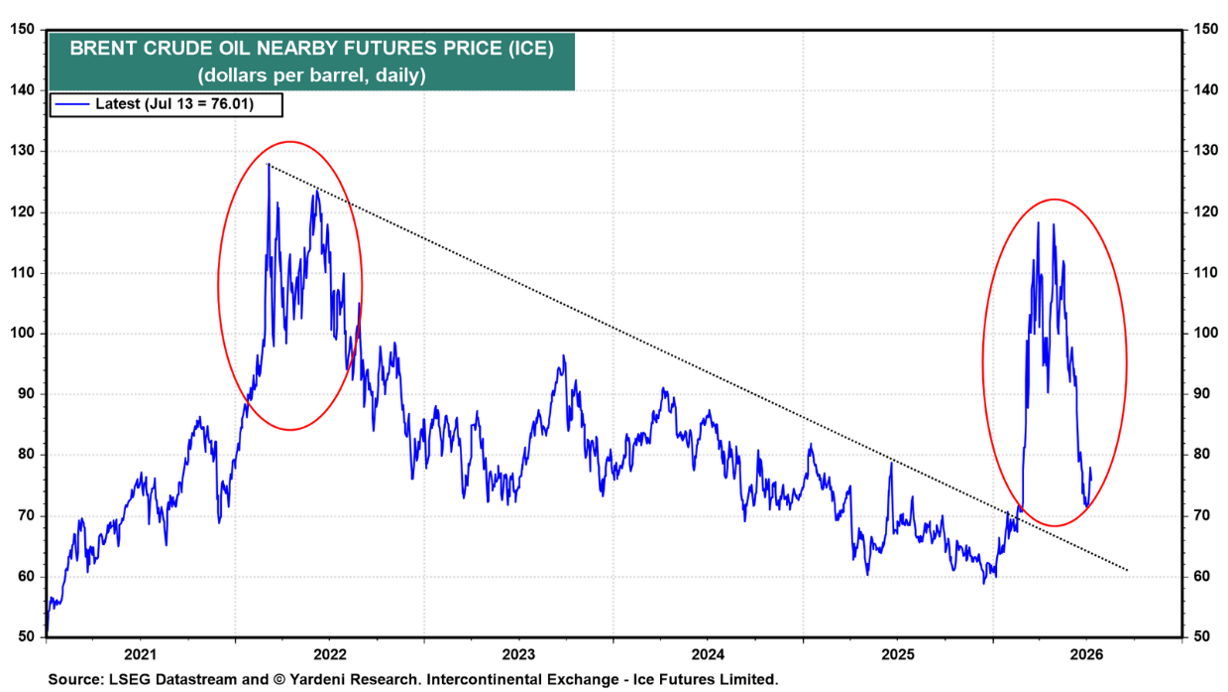
Meanwhile, the price of a barrel of Brent crude oil rose 2.7% to $78.75 Sunday evening and further on Monday. But the sharp drop in oil prices during June confirms that the war might have interrupted, though only briefly, a bear market in crude oil that started after Russia invaded Ukraine in 2022. That would explain why the disruption of oil supplies transiting the Strait hasn't had a much bigger impact on the oil price.