

Everyone’s focused on fuel costs. But you might want to pay closer attention to FOOD. The price of agricultural commodities is perking up – and the longer the Middle East conflict goes on, the greater the impact could be.
Check out the MoneyShow Chart of the Day, which shows the recent performance of four key ag commodity futures contracts. Wheat is the big winner, up 24% year-to-date, but corn, soybeans, and sugar are also solidly in positive territory. The Bloomberg Agriculture Spot Index that tracks 10 food staples tells the same story. It just hit a 29-month high.
Wheat, Corn, Sugar, Soybean Futures (YTD % Change)
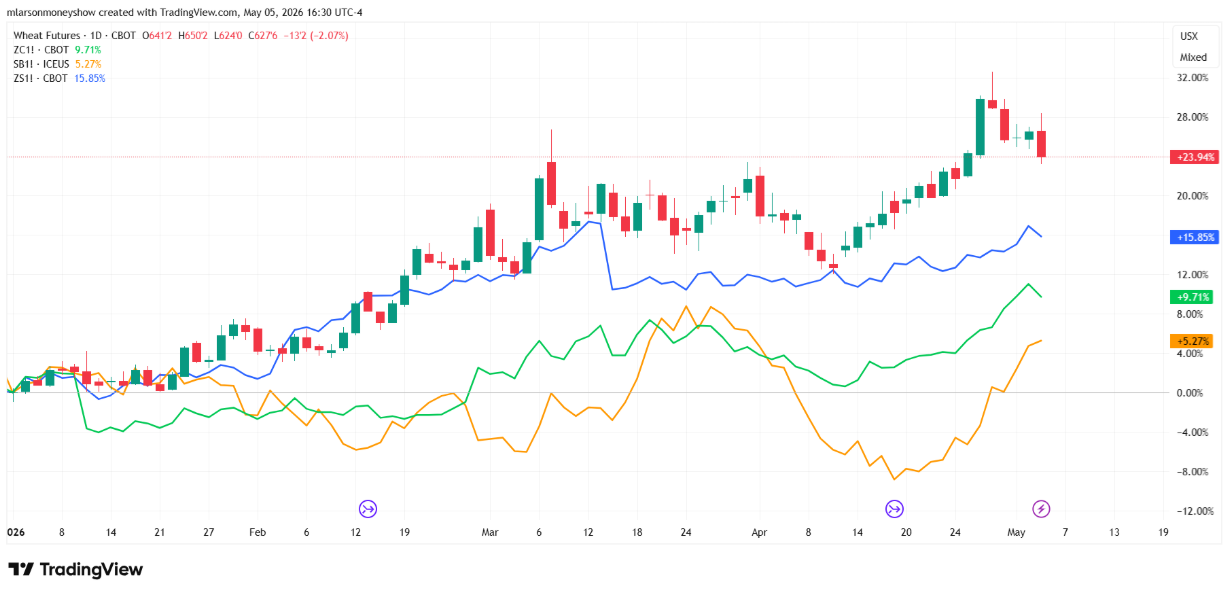
Source: TradingView
Like with oil, gas, and refined product prices, the problem is the Persian Gulf. Shipping traffic remains a fraction of what it once was – with key fertilizer ingredients not making it to world markets.
Traders are pricing in the risk that will reduce future crop output – as well as the added fuel cost of getting commodities from Point A to Point B by ship elsewhere. Aluminum is another resource facing war-related supply pressures. It's up about 15% YTD.
If you’re looking to trade the trend, you can trade commodities. You can trade options on futures. Or you can trade commodity-focused ETFs, including the Invesco DB Agriculture Fund (AGG). Of course, there are plenty of stocks that either benefit from – or get hurt by – rising food prices, too.
Just be sure you go in with your eyes wide open. If we finally get some LASTING good news out of the Middle East, it’s going to have a big impact on multiple markets. That includes agricultural commodities.