

This week, we saw a big “No Confidence” trade in markets. So, what does it mean? How serious is it? What might come next?
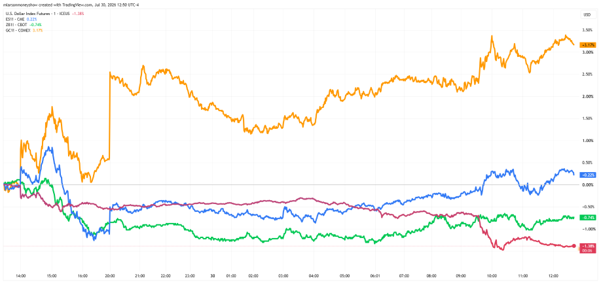
Let’s start with the MoneyShow Chart of the Day. It shows the performance of futures contracts that track the US Dollar Index, the S&P 500 Index (^SPX), the US long bond, and gold – starting just before 2 pm Eastern Wednesday and running through midday Thursday. The Federal Reserve announced it was standing pat with short-term interest rates at the start of that timeframe. But the vote was split 9-3, with the trio of dissenters preferring a 25-basis point hike.
Dollar Index, S&P 500, Long Bond, and Gold Futures
(Post-Fed % Change)
Source: TradingView
What does the chart show? Starting just after 2 pm, the dollar (red line) started falling...the long bond (green) started slumping...and gold (orange) started surging. The S&P 500 (blue) gave up all its post-Fed gains and fell hard into the close.
Why did that happen? New Fed Chair Kevin Warsh SAID all the right things about being tough on inflation on Wednesday. But he didn’t ACT despite renewed inflation pressures. That led investors to price in a higher risk of longer-term inflation – by selling bonds, selling the dollar, selling stocks, and buying gold.
Since bond yields move in the opposite direction of bond prices, yields rose in the wake of the Fed news. But long-term yields surged much more than shorter-term yields, steepening the yield curve. That’s another classic pattern you see in markets when long-term inflation worries rise.
Yes, it’s only a couple days of trading action. Yes, stocks recovered a chunk of ground on Thursday. But this new trend bears watching.
Lost confidence can be hard to earn back. If market participants continue to flee bonds, sell the greenback, unload equities, and buy gold, the Fed MAY have to respond with more aggressive interest rate moves to restore order. And that process could be painful.