

For a market that has relied heavily on the AI trade to drive gains, there are more significant concerns than a temporary move in bond yields. Against this backdrop, the Nasdaq 100 futures could extend their losses in the near-term, advises Fawad Razaqzada, technical analyst at TradingCandles.
The debate appears to be shifting from how big AI can become to how profitable the investment cycle will ultimately be. Strong chip demand is one thing; generating adequate returns on the huge sums being spent on data centres, computing capacity, and infrastructure is another.
There are already signs that the pressure is spreading beyond equities. Credit markets are showing increased concern around heavily indebted technology companies, while businesses with large capital requirements face a particularly difficult backdrop if financing costs remain elevated.
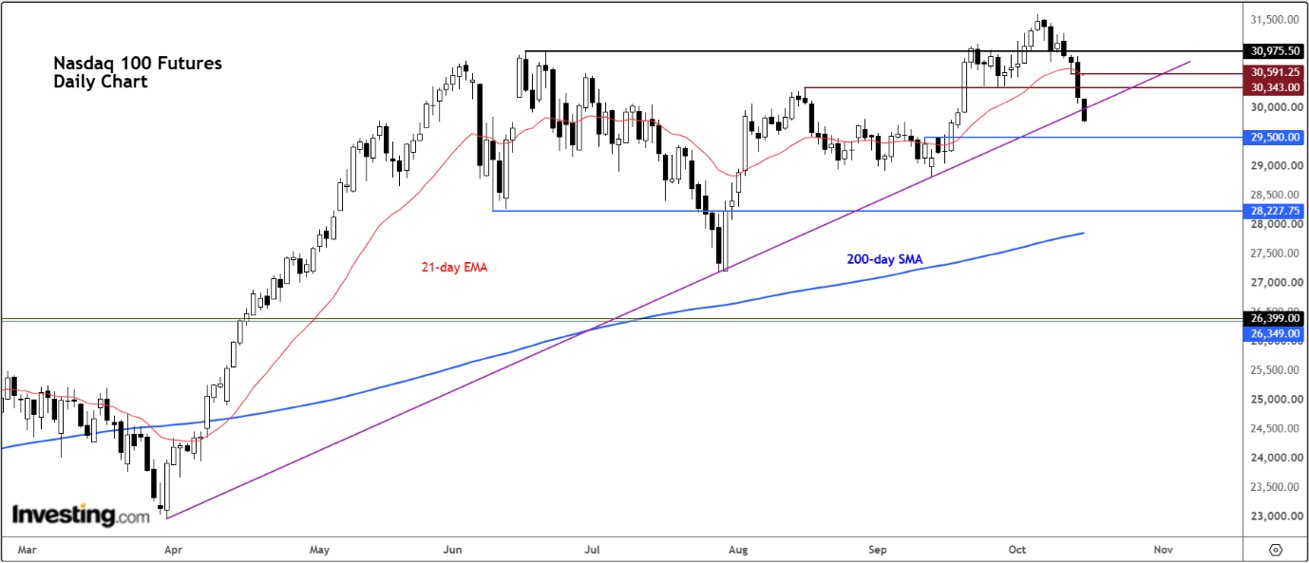
That helps explain why the Nasdaq has struggled even as bond yields have retreated. The technical picture has also deteriorated. Nasdaq 100 futures have broken below a bullish trend line extending back to March. A close below the trend line would strengthen the case that the broader uptrend is beginning to reverse.
The first important support level is around 29,500. Below there, 29,000 becomes the next obvious downside target. On the upside, resistance is now concentrated between 30,340 and 30,600. Unless the index can reclaim that area, the short-term bias remains bearish.
For now, the combination of stretched valuations, doubts over AI investment returns, and a potentially more hawkish Federal Reserve leaves the Nasdaq vulnerable to further losses.