
SK Hynix joined Samsung Electronics Co. and Micron Technology Inc. (MU) in the $1 trillion market cap club this week. The valuation crowd and spreadsheet gang are going bonkers. Let ‘em, says Keith Fitz-Gerald, editor of 5 With Fitz.
This is the first time in history that all three dominant global memory chipmakers have held trillion-dollar valuations at the same time. But most analysts are still anchored to early estimates of AI's economic impact because they’re thinking “too small.”
(Editor’s Note: Keith will be speaking at the 2026 MoneyShow Masters Symposium San Francisco, scheduled for Aug. 25-28. Click HERE to register.)
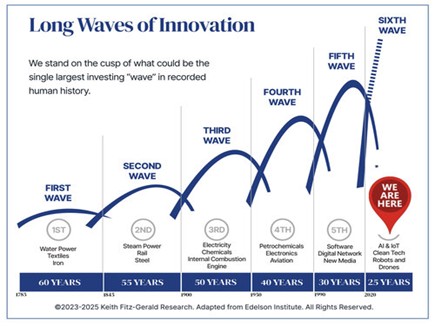
When AI first began scaling, IDC pegged the downstream return at roughly $4.60 for every dollar spent on AI solutions and services. That was already a compelling case for why the buildout wasn't the speculative bubble skeptics claimed.
But my friend and colleague Dan Ives of Wedbush put his own number on it, saying that every dollar spent on an Nvidia Corp. (NVDA) chip carries an 8-to-10x multiplier effect cascading through software, enterprise deployment, and productivity gains downstream.
As much as I love Dano, those figures reflect the early innings. As I've argued on Fox Business and CNBC, we may now be looking at a multiplier of $20 or more for every dollar invested in AI — and the data is starting to catch up to that view.
Apply even a conservative multiplier to the $2 trillion in global AI spending projected for 2026, and the downstream economic value generated becomes one of the largest wealth creation events in modern history. At the risk of sounding like a broken record...if AI were a baseball game, we're STILL so early that the hot dog vendors aren't even warmed up yet.
The question for investors isn't whether the multiplier is real. It's whether they're positioned ahead of it.