
Gold has been soft since the Iran conflict started – in part because the war sent the dollar up, while the oil price spike had central banks focusing on the inflationary impacts and discussing raising rates. But if you are underinvested, this is a good time to buy, maintains Adrian Day, editor of Global Analyst.
A strong dollar and higher rates are bearish for gold. Every time negotiations to end the conflict seemed to be going badly, gold fell. Then on Friday, more strikes by both sides and (seemingly) strong US economic reports sent gold down sharply.
Spot Gold
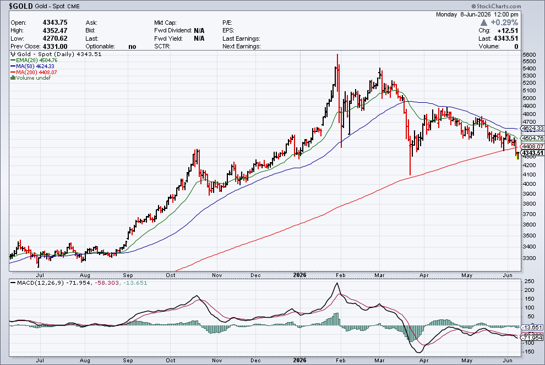
I say “seemingly” because, though certainly stronger than expectations, increased hiring by local governments and the government-dominated health care sector accounted for almost all new jobs created. Temporary hospitality jobs because of the World Cup accounted for many of the remaining ones.
Gold had been sitting on the crucial 200-day moving average but broke through Friday morning, setting off numerous stop losses. This was the first drop below the 200-day MA since 2023. Gold fell $150 to its lowest close this year, while the VanEck Gold Miners ETF (GDX) fell almost 9%.
This came even as central bank activity for April was reported, showing a strong April with less selling. That came on top of a strong first quarter (highest quarter since the end of 2024), despite high-profile sales. In April, central banks had net buying of 17 tonnes, or nearly 600,000 ounces.
When the conflict ends, then the narrative will shift. The dollar will lose its war premium and central banks may shift their focus from the inflationary effects of higher oil prices. When that will be, we do not know. But the set up for gold after it occurs is strong.
At the same time, let’s remember that mid-cycle corrections are the norm. We saw as much as a 45% correction in the middle of the bull market of the 1970s, and a 34% slide in 2008 before a move of more than 180% higher in the next three years.