Words and phrases can help us communicate with each other quickly and efficiently. But for some important matters, a single word or phrase can be a little too imprecise and ambiguous. Take the word “bubble,” writes Sam Ro, editor of Tker.co.
This can be a big problem when discussing the markets and the economy, where language sometimes has multiple meanings. There’s also the fact that people often leave out the time frame when they’re talking about markets, which is why short-term traders and long-term investors often sound in conflict when they might actually agree.
S&P 500 Index (^SPX)
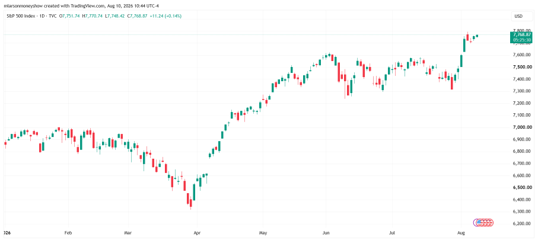
Source: TradingView
In my experience, no two people define bubbles precisely the same way. However, everyone at least agrees that bubbles involve asset prices rising far past what most would argue is justifiable — before falling sharply.
With that in mind, let’s say we’re in a bubble. What are we to do with that information? When some market pundits warn we’re in a market bubble, they’re trying to tell you that you shouldn’t have money in the market because they think you’re at risk of losing money.
But many other experts will stop short of suggesting that money invested now is doomed to turn into losses. Because it’s possible that prices go much higher, and when they eventually fall, they settle at a level that’s higher than where we are today.
Consider when then-Federal Reserve Chair Alan Greenspan uttered the phrase “irrational exuberance” in December 1996. The S&P 500 Index (^SPX) was at 749. While he wasn’t explicitly warning the market was in a bubble, he was at least suggesting that there were signs the market was overextended. And history credits him for predicting the dotcom bubble that eventually burst.
Here’s the issue: After the dotcom bubble popped, the S&P 500 bottomed in 2002 at 776. That’s right. The S&P’s post-bubble low was actually higher than where it was when Greenspan gave his speech.
So, if someone tells you we’re in a bubble, you should at least ask if they think the market will be lower than where it is today once the dust settles.