For quite some time, the default choice for the fixed-income component of a traditional 60/40 balanced portfolio was the iShares Core US Aggregate Bond ETF (AGG). But the iShares Core Universal USD Bond ETF (IUSB) is playing catch up, observes Tony Dong, lead ETF analyst at ETF Central.
The AGG is a broad benchmark encompassing more than 10,000 investment-grade, US dollar-denominated bonds across the maturity spectrum, from short-term debt to intermediate- and long-term securities. AGG attracted approximately $8.8 billion in net inflows year-to-date as of Oct. 7.
iShares Core Universal USD Bond ETF (IUSB)
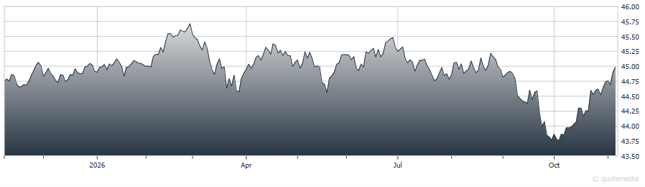
That's a respectable figure. But the IUSB nearly doubled it, gathering approximately $16.2 billion over the same period. That's an interesting development because IUSB isn't nearly as well-known as AGG, despite also being positioned as a diversified core bond holding. So, why are investors increasingly gravitating toward IUSB?
IUSB Offers Broader Exposure: Despite its name, AGG doesn't actually represent the entire US bond market. Its benchmark is limited to investment-grade bonds, meaning securities rated BBB or higher by major credit rating agencies.
IUSB, on the other hand, tracks the Bloomberg US Universal Index, which aims to represent a broader portion of the US dollar-denominated taxable bond market. In addition to investment-grade securities, it includes certain high-yield corporate bonds and other debt excluded from the AGG
IUSB Pays a Higher Yield: The second advantage is income, which may be particularly relevant given the higher-for-longer interest rate environment. As of Oct. 6, AGG had a 30-day SEC yield of 5.1%, compared with 5.49% for IUSB.
IUSB Remains Affordable: AGG is among the cheapest diversified bond ETFs available, charging an expense ratio of just 0.03%. IUSB is twice as expensive at 0.06%, but the absolute difference is negligible for most long-term investors.
On a $10,000 investment, annual expenses would amount to approximately $6 instead of $3. I think that's a reasonable premium considering the additional exposure investors receive.