
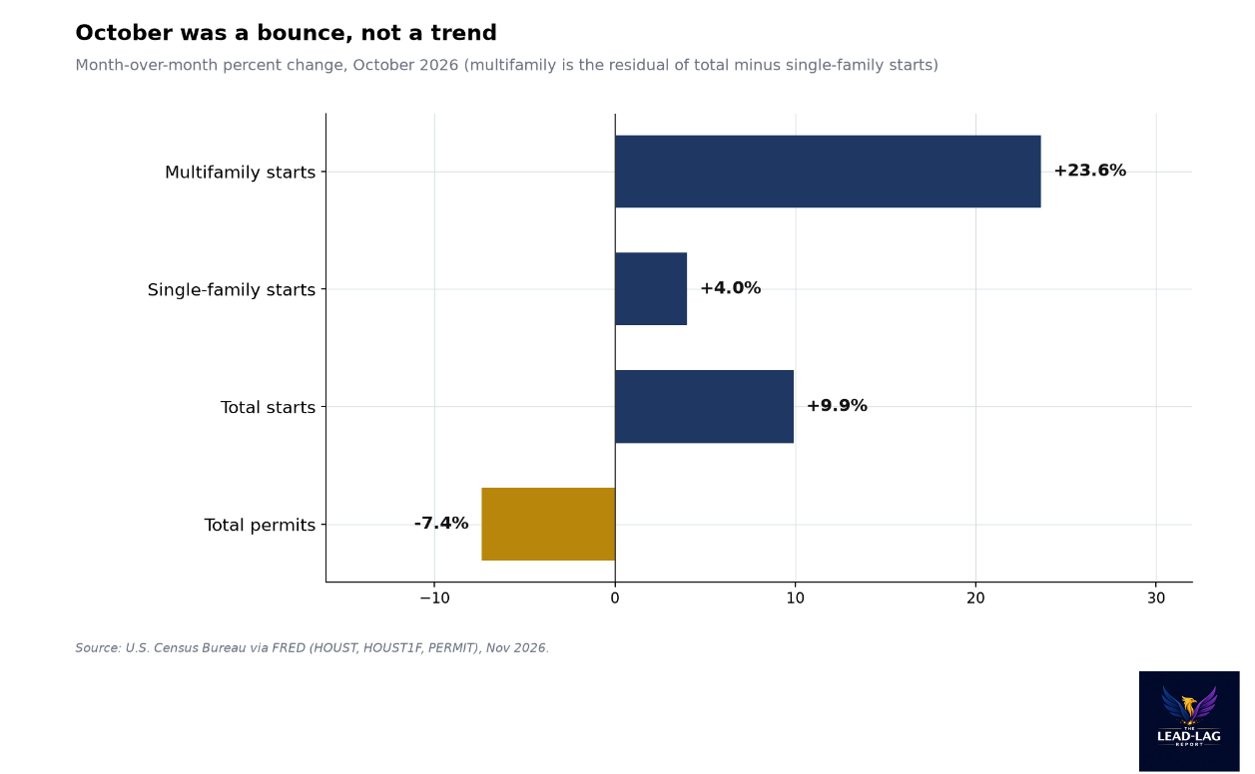
The Census Bureau's new residential construction report for October is a lesson in why I watch permits before starts. Total housing starts rose 9.9%, the biggest monthly jump since June. But building permits fell 7.4% to the lowest level since May 2020, highlights Michael Gayed, editor of The Lead-Lag Report.
Starts tell you what one month's weather and one quarter's apartment schedule did. Permits tell you what builders expect to do next, and builders just filed the most cautious paperwork in six years.
Meanwhile, the number that keeps the housing industry employed is not starts and not permits. It is homes already under construction. That count, 1.272 million single-family units, has moved less than 4% in three years. Builders slowed the intake valve without abandoning the jobs in progress.
That is deliberate: Land bought at 2022 prices, labor contracted at 2024 rates, and a buyer who will still sign a contract if the house is nearly finished. A builder who has already poured the foundation does not stop at 80% completion. So, the construction paychecks keep going out long after the permit office goes quiet.
This is also why the housing recession the surveys keep announcing has been so hard to see in the employment data. The pipeline hides the slowdown: Fewer new projects enter, the existing ones take longer, and total construction employment barely moves. The reckoning only arrives when the pipeline drains.
Permits now run 14.6% below their 2023 monthly average. Single-family starts are 8.7% below December. The backlog is not being refilled at the front end.
For now, the honest reading of October is this: The construction industry is still busy finishing yesterday's demand, while quietly cutting tomorrow's. That divergence resolves one way or the other. The permits line tells you which.