

There are more signs that OPEC compliance to production cuts will remain strong, writes Phil Flynn.
Oil prices are marching forward pegging two months of increases in a row (see chart). A slowing but better than expected U.S. GDP reading offset the negative impact from weak Chinese economic data. The U.S. GDP came in at a higher than expected 2.6% annualized rate. The fundamental picture for oil remains bullish as OPEC cuts will continue and U.S. demand will remain strong.
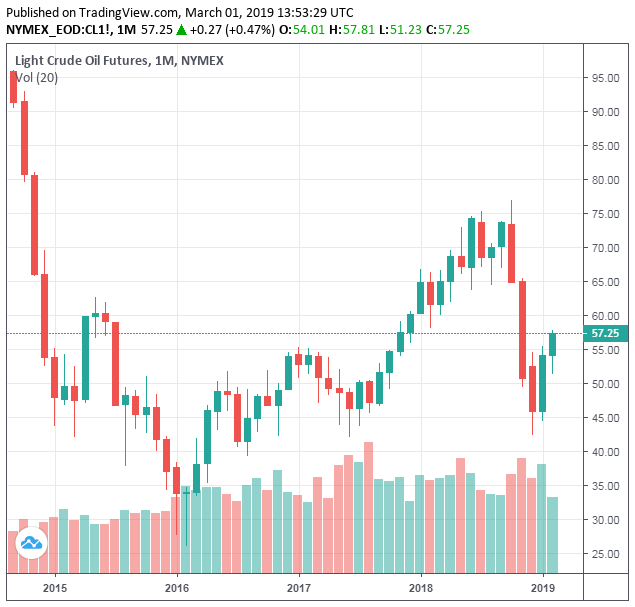
President Trump might not be able to tweet himself out of this one. Crude oil traders reacted to reports that the strategic petroleum reserve (SPR) was looking to sell six million barrels of oil. The sale is not to counteract the loss of Venezuelan or OPEC oil but to use the money to maintain facilities. Plus, the SPR oil is light oil and not really going to help replace those barrels.
In fact, there are more signs that OPEC compliance will remain strong. Bloomberg News reported that Saudi Aramco shipped just 1.6 million barrels of its oil to U.S. Gulf Coast buyers last month compared with 5.75 million a year ago, according to U.S. Customs data compiled by Bloomberg. In January, shipments were at 2.69 million. It is possible that we will soon see zero oil from Saudi Arabia. I thought we were trying to get zero oil from Iran. Oh well.
Continuing increasing gas pump prices are almost assured. Refiner maintenance and the coming summertime blends puts gas prices on an upward trajectory. We also are on a path to tightening oil supply. The solid economy should get gasoline demand at record levels as we get into the heart of the summer driving season.
The lack of heavy crude will cause diesel prices to rise as well. The coming diesel squeeze could impact many businesses. If you have exposure get hedged.
Natural gas saw a bearish report yesterday. The EIA reported that working gas in storage was 1,539 Bcf as of Friday, Feb. 22, 2019, according to EIA estimates. This represents a net decrease of 166 Bcf from the previous week. Stocks were 154 Bcf less than last year at this time, and 424 Bcf below the five-year average of 1,963 Bcf. At 1,539 Bcf, total working gas is within the five-year historical range.