The S&P 500 Index (^SPX) ended last Thursday’s session with a drop of 0.9%, a relatively modest pull-back from Wednesday, especially given the fact that the broad-based index is up 16.2% year-to-date. But looking under the surface, the gain proves to be more than a little bit deceiving, suggests Tom Essaye, president of the Sevens Report.
For one thing, of the total 503 S&P 500 holdings, only 144, or 28.6%, are outperforming the S&P 500. That means 359 S&P 500 stocks are lagging the cap-weighted index. Just shy of half of its constituents – specifically, 227 stocks accounting for 45% of the index – are actually down YTD. That is not a figure for bulls to be excited about when assessing the prospects for the 2025 rally to be sustainable.
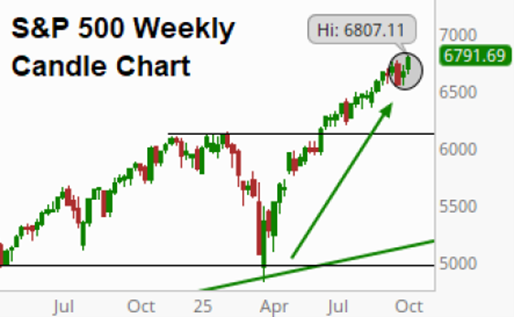
For another thing, the weekly reading of the NYSE Advance-Decline Line (measuring the number of stocks advancing versus those retreating on the entire NYSE on a week-to-week basis) retreated to a 12-week low Thursday.
That is especially noteworthy because of last week’s record highs. We would logically expect to see more stocks rising than falling as benchmark indexes reach new highs. Further to that point, the NYSE Advance-Decline Line has not made a new high since the week of Sept. 1, despite the S&P 500 notching 14 new closing record highs since September.
Bottom line: It is not unusual to see increasing concentration and very strong relative performance in market-leading stocks within a long-term equity market advance. However, it is healthy to see broad participation among the majority of the constituents of the S&P 500. Right now, we are seeing extreme levels of concentration and a growing number of divergent, lagging stocks within the S&P 500.