
The S&P 500 Index’s (^SPX) dividend yield sits below 2%, hardly satisfying retirees or income seekers. Meanwhile, traditional bonds offer higher yields but still carry rate and inflation risks. Wall Street has taken note. The Goldman Sachs S&P 500 Premium Income ETF (GPIX) packages a covered-call strategy for mainstream income investors, points out Michael Gayed, editor of The Lead-Lag Report.
A covered-call strategy enhances portfolio income by holding stocks (or an index) and selling call options against them. The investor collects option premiums upfront, generating immediate cash flow. If stocks remain flat or fall modestly, the options expire worthless and the premiums are retained — effectively earning “extra income” from owned positions. This structure shines when markets are range-bound or when they're overvalued and rapid gains seem unlikely.
Goldman Sachs S&P 500 Premium Income ETF (GPIX)
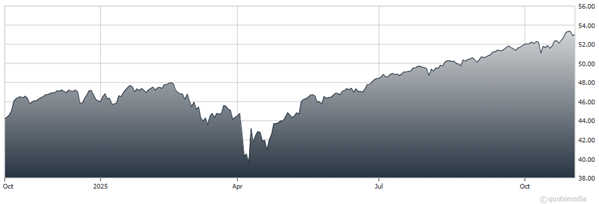
The trade-off is capped upside. Should stocks rally beyond the strike price, gains above that level are forfeited. In strong bull markets, covered-call strategies lag traditional equity portfolios.
GPIX maintains broad exposure to the S&P 500 while dynamically selling call options on portions of its holdings to generate monthly income. The fund’s goal is straightforward: deliver consistent cash flow while retaining some participation in rising markets.
Still, in a powerful bull market, GPIX will trail a plain index fund as options limit profit potential. Another risk involves income variability. Option premiums — and therefore monthly distributions — fluctuate with volatility. When markets calm, premiums shrink, reducing payouts. “Consistent” distributions don’t mean uniform amounts.
Moreover, because GPIX is equity-based, it remains exposed to market drawdowns. Call income cushions declines only partially. The fund may fall less than the S&P 500 in a downturn but it won’t be immune.
Bottom line: GPIX stands out as a practical solution for investors navigating a late-cycle market. The strategy won’t win every race, but its balance of offense and defense suits an environment of slowing growth, higher volatility, and modest expected returns.