Whenever there has been a confrontation with Iran, the question was always, “Whatever happens if the Strait of Hormuz closes?” It was always the worst nightmare scenario but never seemed to come to pass. Well, here we now are, it seems, observes Peter Boockvar, editor of The Boock Report.
China gets about 45% of its crude oil needs from the Middle East, with 11% from Iran in particular. So, they had their economic say to Iran. But now Iranian officials said they are closing it, via bombing threats, even though US Central Command said that is not the case.
United States Oil Fund (USO)
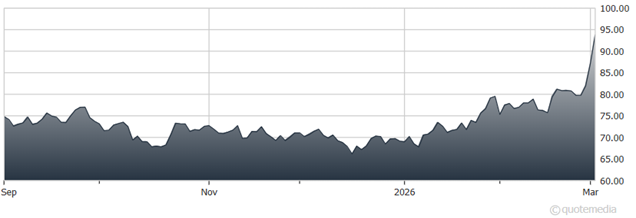
Either way, tanker prices have skyrocketed...insurance is only available at much higher prices, if one can get it...and we know the delivery of both crude and LNG is about to fall dramatically. According to a Reuters story, the cost of shipping two million barrels of oil from the Middle East to China in a VLCC (very large crude carrier) rose to about $425,000 per day, a record high. That is double the price seen last Friday.
Markets seemed to have gotten off easy Monday. Even after the closing of the Strait story came out that afternoon, stocks didn’t really respond. So, what we saw Tuesday on the screens was a definite delayed reaction.
As for my earlier point that China gets almost half of its crude shipments via the Strait, they are already vocal about allowing safe travel of tanker shipments. According to Bloomberg, they have “been pressuring Iranian officials behind the scenes, urging them to avoid action that would disrupt Qatari gas exports or other energy shipments making their way through the Strait. So far, at least four commercial ships have reportedly been damaged.”
Overall, markets right now are impossible to trade because the Strait can reopen at any time. The Iranians can see regime change at any time. Or the reverse can be true, where they fight on and the Strait remains essentially closed for a longer period of time.