
Gold dropped from a peak of $5,375 on Jan. 29 to $4,661 by Feb. 2. By March 2, it was back at $5,419...and on March 23, the low was $4,099. That’s a lot of volatility. Now, let’s consider the medium-term outlook for gold, writes Eoin Treacy, editor of Fuller Treacy Money.
You might remember what I was saying in January: No new positions. Accelerations are always a trend ending, but of undetermined duration. When an instrument has been trending rhythmically for several years – and accelerates – it tells us sentiment is getting exuberant and the risk of mean reversion is rising.
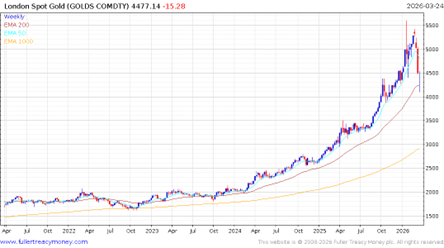
That is a difficult point to internalize because we are making money faster than we have in years and perhaps ever. Following the start of the war in Iran, gold dropped hard and investors began to wonder why?
There are several reasons but one above all others sticks out. The primary reason gold pulled back so violently is because Treasury yields jumped and the dollar rebounded. Taking the possibility of interest rates cuts away this year was a significant headwind for gold.
In fact, higher yields and a strong dollar are both headwinds for gold since it does not pay a dividend, and it is monetary metal. When you add that to the fact that gold is a volatile instrument, it goes a long way to explaining the decline.
But are central banks more or less likely to build up their stores of gold following the US’s adventurism in Venezuela and Iran? My guess is they need gold more than ever to hedge themselves from being cut out of the global financial system.
Then there is the fact that the US government is still engaged in massive fiscal stimulus and has no intention of moving towards a balanced budget. That’s also good for gold. I suspect the most likely scenario is the price will range for the next several months, but we are at the lower side of that range now.