
The July 2026 jobs report was a stark confirmation that US hiring momentum has ground to a halt. For the Federal Reserve, the data leaves little choice but to lean toward looser monetary policy to stave off further labor market deterioration, says Bryan Perry, editor of Cash Machine.
It is not a story of widespread corporate mass-layoffs, but rather an abrupt, structural hiring freeze compounded by heavy historical revisions that caught Wall Street off guard. Non-farm payrolls dropped by 23,000 jobs in July, missing expectations of an 85,000 gain.
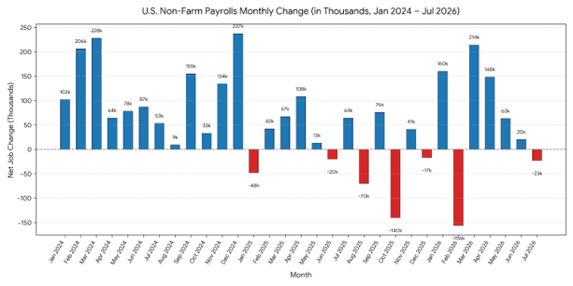
The Bureau of Labor Statistics also erased 103,000 jobs from previous reports. May was revised down by 66,000 (from +129,000 to +63,000), and June was cut by 37,000 (from +57,000 to +20,000). The three-month moving average for job growth sits at a meager 20,000 per month.
There are seasonal issues at work with the summer education number being soft, and the conclusion of the FIFA games that needs to be considered. But the data corroborates the latest Beige Book report showing consumers are adjusting their buying, taking on more debt, and trading down to cheaper alternatives.
The market’s bullish reaction was that the data will trigger a free money, lower interest rate environment. But in reality, the release of the latest employment figures has stripped away the illusion that the American labor market can coast indefinitely on post-pandemic momentum.
In sum, one month’s negative jobs print doesn’t make for a trend. But the weak non-farm payroll numbers and historical revisions serve as a yellow caution flag that the US consumer-led economy is under a higher level of scrutiny.