Global markets are reeling today, with oil prices rocketing higher and stocks tumbling. Gold and silver are modestly lower along with Treasuries, while the dollar and Bitcoin are rising a bit.
The intensifying conflict in the Middle East is REALLY hitting home in commodity and equity markets now. US crude oil futures prices shot up 36% last week, the most in any week since the benchmark contract began changing hands in 1983. Then overnight and this morning, WTI futures soared ANOTHER 13% to $102.44 before easing back from intraday highs.
USO, UNG, SPY (1-Week % Change)
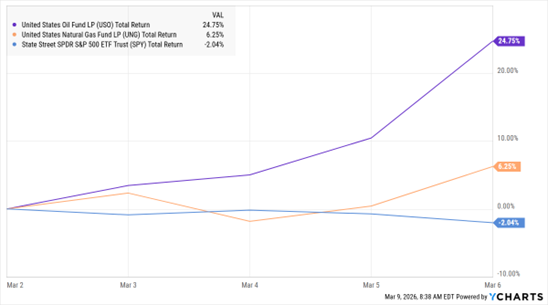
Data by YCharts
Oil hasn’t traded in the triple digits domestically since 2022. Natural gas prices also rose another 5% in the US – while really taking off globally. Case in point: European gas prices jumped another 14% overnight after a 67% surge last week.
The problem is the effective (though not “official”) shut down of the Strait of Hormuz in the Persian Gulf. Ships carrying oil, LNG, fertilizer, and other cargos aren’t transiting the Strait because insurance costs have exploded and shippers fear they’ll come under attack by Iran.
Drone and missile attacks on Gulf energy facilities have also curbed extraction and processing activity. Furthermore, big oil producers like Iraq, the UAE, Kuwait, and now Saudi Arabia are turning off the taps because land-based storage tanks are mostly topped off – and they can’t load more production on ships.
As for equity and bond markets, we’re seeing “stagflation” trades proliferate. Global stock markets have shed about $6 trillion in value amid fears the widening conflict and associated energy shock will kneecap growth. Meanwhile, we have NOT seen aggressive “flight to safety” moves into government bonds due to inflation fears tied to the pop in energy prices. Long-term interest rates remain elevated as a result.
In one final bit of war-related news, Iran picked Mojtaba Khamenei to succeed his deceased father Ayatollah Ali Khamenei as supreme leader over the weekend. The move signals that Iran will stick with a hardline approach to the conflict and its own population, rather than seek a speedy diplomatic offramp. That, in turn, suggests the conflict – and associated market volatility – will drag on.