

It is pretty well understood that Bitcoin is a lead indicator for the stock market. They are both risk assets. But gold is more closely allied to government bonds. Some of the factors that lead to bond strength often lead to gold outperforming, too, advises Eoin Treacy, editor of Fuller Treacy Money.
When government bonds struggle, gold tends to perform well. That is because it is no one’s liability. In simple terms, you might worry about whether the government will give your money back when your bond matures. At the very least, you will worry how much of a bite inflation has taken from the purchasing power of the principal, and whether you were adequately compensated by coupon income for the risk.
For example, if governments have an inflation problem, but are more concerned about unemployment, they don’t do what is necessary to defeat inflation. That tends to be very bullish for gold.
On the other hand, when technological innovation leads to broad deflationary forces, it supports bonds but not gold. That is usually because the value of the US dollar increases and weighs on the allure of gold as a competing currency unit.
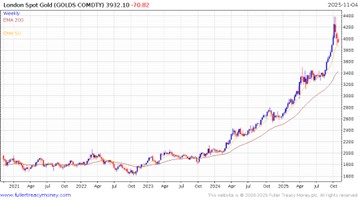
So, why is gold struggling now? The short answer is it was among a relatively small group of assets that surged in value together over the last several months. Gold, silver, precious metal miners, rare earth metal companies, uranium miners, AI stocks, utilities, and the mega-caps have led the market higher.
As some of the steam comes out of the AI trend, gold has also taken a breather. It is important to emphasise that a lot of hot money chases bull trends in gold.
That explains the sharp drawdown over the last couple of weeks. Even so, the price is still holding the 50-day moving average. This is still just another consolidation in the ongoing bull market until proven otherwise.