

With efforts towards a lasting peace ongoing, we could see some fresh pressure on crude oil prices. But the downside could be limited with the bulk of the move already having taken place. WTI futures have been falling for several weeks now, and understandably, prices are becoming a bit oversold, notes Fawaz Razaqzada, technical analyst at TradingCandles.
How far oil prices ultimately decline from here will depend entirely on supply and demand dynamics. From the demand side, there are reasons to expect continued strength. Strategic reserves will need to be replenished, while the US summer driving season should continue to support fuel consumption and keep pressure on inventories of oil products like gasoline. This should offset raised supplies from the OPEC countries and Iran in particular.
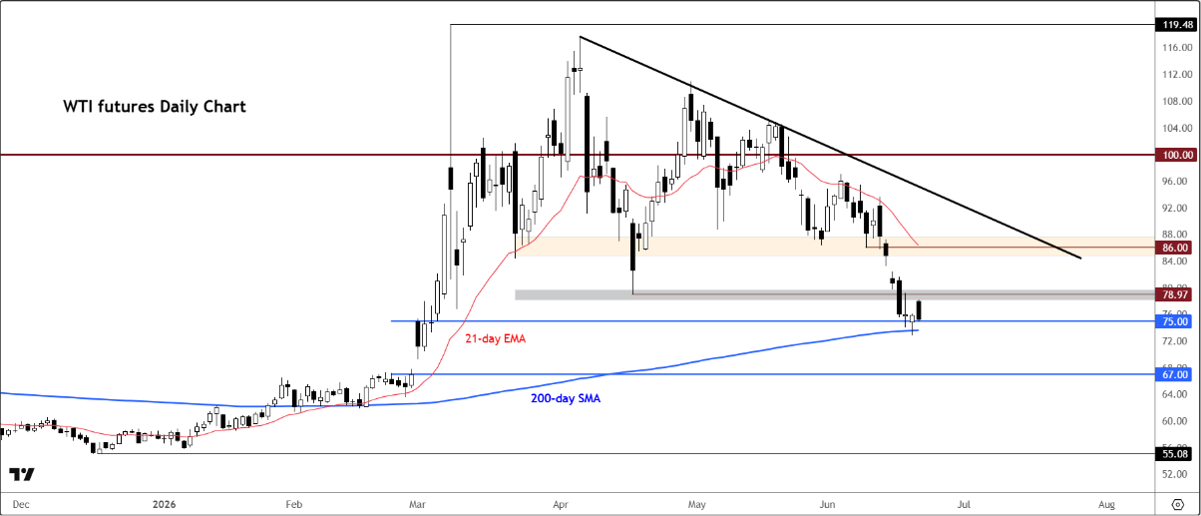
This raises the potential for some sort of bounce, especially if there are continued or renewed tensions in the Middle East that impact oil supplies through the Strait of Hormuz or other key areas.
WTI has now touched $75 per barrel – a potential support zone considering prices held above this level during the last two trading days of last week. On Friday, WTI bounced nicely off the 200-day moving average, which comes in at around $73.65. That’s another important level to watch.
Below these levels, we have $70 per barrel, another psychologically important support level. That’s followed by the levels where oil was trading before the conflict began, around $67 per barrel.
On the upside, $78.90 to $79 per barrel marks a key short-term resistance area. Prices found support there back in April before eventually breaking through that area last week. We have now retested this level from below, and so far prices have remained beneath it. A break above that level could trigger a quick move toward the $85–$86 per barrel area.