

The Federal Reserve raised rates in September, and the 10-year Treasury yield has since topped 5.3%, the highest since 2007. Does every additional hike from here raise the risk of Fed over-tightening? And what does it mean for traders? Here’s my take, says Lance Roberts, editor of the Bull Bear Report.
The data suggest the “runway” before the damage from Fed hikes shows up is shorter than most assume. Howard Marks has long made the point that you can’t predict, but you can prepare. That applies here more than usual.
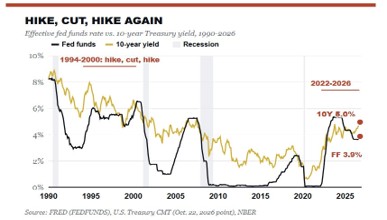
The risk of Fed over-tightening doesn’t argue for dumping equities, but it does argue for recognizing that the asset-price channel now matters more to the economy than at any point in the last cycle. A 10% to 15% decline would hit the economy harder than in 2018. It would directly cut spending by the top income cohort.
In trading and portfolio management terms, that means taking some actions today to protect against negative outcomes in the future:
• Rebalance winners to their target weights rather than chase them.
• Keep exposure to rate-sensitive, consumer-dependent businesses measured.
• Respect what a 5% Treasury yield offers patient investors.
Bottom line: The bond market and an asset-dependent consumer have already done much of the Fed’s work. Each additional hike raises the risk of Fed over-tightening far faster than the historical lag suggests.