
Treasury Secretary Scott Bessent insists on challenging the bond vigilantes, and neither side is backing down. The underlying trends are pointing toward volatility ahead…and potentially much more. Gold investors should keep this in mind, suggests Brien Lundin, executive editor of Gold Newsletter.
What an interesting macroeconomic picture is being painted at the moment. I’m afraid it will be “interesting” not in a “well, that’s fascinating” way, but something closer to the old Chinese curse, “May you live in interesting times.”
There’s a lot I could cover in this regard. But much of it can be summarized by the observation that Bessent is busily talking Treasury bond yields down…while Federal Reserve Chairman Kevin Warsh is just as busily talking Treasury bill yields up. And it increasingly looks like both are going to be disappointed in the results.
10-Year Treasury Note Yield
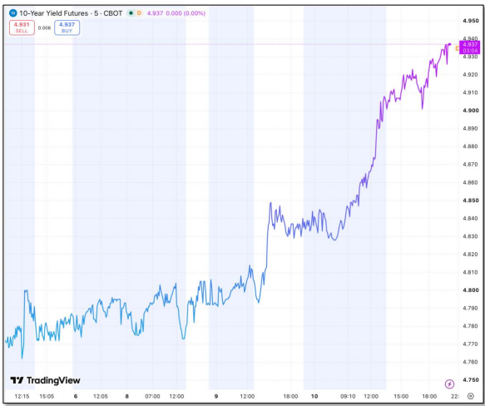
Consider the trajectory of the 10-year Treasury yield over the last several trading sessions. There’s a bulls-eye on 5%, and the market usually gets what it wants.
Moving to the other end of the curve, Warsh might get his higher rates even without resorting to the rate hike that so many analysts now expect. Given President Trump’s promise of a cool $5,000 payment to every adult citizen (at an estimated $1.2 trillion cost), it’s likely that vigilantes demanding higher returns won’t be limited to bonds but bills as well.
Outside of the most recent spate of price weakness in gold, bond yields and the gold price have been rising hand-in-hand. I featured a chart of this recently, showing how the two have been largely positively correlated since late June.
This correlation isn’t a good sign for either Bessent or Warsh, because it evidences the market’s doubt regarding the future value of the US dollar. In addition, I think gold and bonds are sniffing out some trouble ahead. A 5% 10-year Treasury yield looms directly ahead, and that could be a trigger point for a very significant sell-off in equities.